 Skip to content

Heavy duty material handling carts are among the most practical investments a warehouse or production facility can make. When workers are moving raw materials, finished goods, or heavy components dozens of times per shift, the right cart reduces physical strain, cuts transit time, and keeps operations running without unnecessary interruptions. This guide covers the main cart types, what to look for when selecting one, and how to get more out of the equipment you already have.
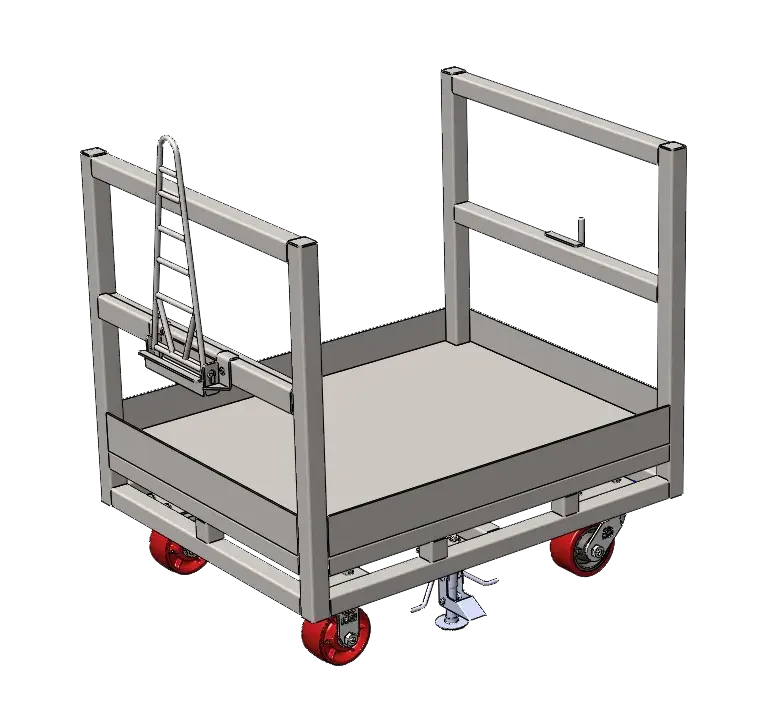
What heavy duty material handling carts actually do
The basic function
At the core, these carts exist to move things that are too heavy, awkward, or time-consuming to carry by hand. That sounds simple, but the operational impact is significant. A cart that handles 2,000 lbs of steel components in a single trip replaces four or five manual trips, each carrying real injury risk and lost time.
Heavy duty carts are built from steel or heavy-gauge aluminum, equipped with industrial-grade casters, and engineered to handle repeated loading cycles without failing. They are not the same as the light-duty utility carts you’d find in a retail stockroom.
Why manual handling falls short
Manual carrying and hand-stacking work fine for light loads. Once you’re dealing with parts over 50 lbs, or high-frequency transport routes that repeat all shift, manual handling becomes a liability. Musculoskeletal injuries from lifting are among the most common and expensive workplace incidents in manufacturing environments. Heavy duty material handling carts remove that exposure.
The workflow connection
Beyond safety, carts change the pace of a facility. Workers who spend less time making repeat trips, or waiting for a forklift to free up, move more product per hour. In high-volume distribution and manufacturing environments, that difference compounds across every shift.
Types of heavy duty material handling carts
Platform carts
Platform carts have a flat, open deck and are the most versatile option in this category. They handle boxes, crates, machinery components, and bulk materials without requiring specific loading configurations. Capacities typically run from 1,500 lbs on the low end to 6,000 lbs or more for heavy industrial versions.
These work well in warehousing, automotive assembly, and general manufacturing — anywhere you’re moving varied loads to varied destinations.
Utility carts
Utility carts add shelves or compartments to the basic cart structure, making them better suited for organized transport of multiple smaller items: kits, tools, fasteners, packaged goods. They’re common in production facilities where workers need to bring a variety of parts to an assembly station without multiple trips.
The tradeoff is capacity. Shelf-style carts don’t handle bulk or oversized loads as well as flat platforms do.
Hand trucks and dollies
Hand trucks are vertical-frame carts designed for moving individual heavy items, often in tight spaces or across elevation changes. Moving companies, delivery operations, and facilities with stairs or ramps use these regularly. Load capacity varies widely, from 300 lbs for standard hand trucks to 1,500 lbs or more for industrial versions with stair-climbing wheels.
Dollies offer a low-profile flat platform that slides under heavy items easily. They’re useful when you need to relocate equipment that’s already sitting on the floor.
Flatbed and custom carts
Flatbed carts are built for oversized or irregularly shaped loads: long metal stock, large fabricated parts, coils, or full pallets. They’re common in fabrication shops and factories that deal with non-standard load dimensions. Custom versions can include V-notch supports for coils, raised side rails, or specific deck dimensions built to match a facility’s unique requirements.
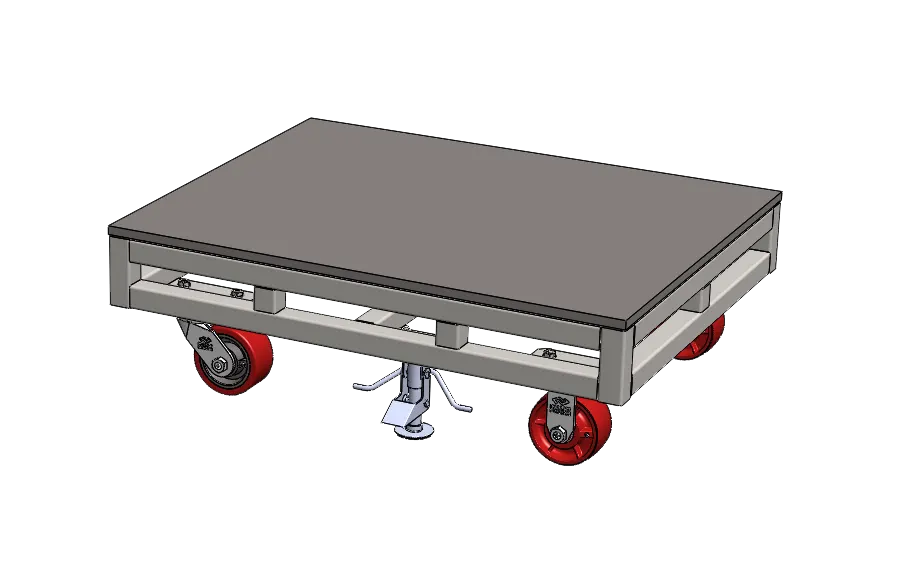
Cart type comparison
| Cart Type | Typical Capacity | Best Application | Key Limitation |
|---|---|---|---|
| Platform Cart | 1,500–6,000 lbs | General warehouse, manufacturing | No containment for small parts |
| Utility Cart | 500–1,500 lbs | Parts kitting, tool delivery | Not suited for bulk or oversized loads |
| Hand Truck | 300–1,500 lbs | Tight spaces, stairs, single-item moves | Low capacity per trip |
| Dolly | 500–3,000 lbs | Moving floor-level equipment | Limited to flat, stable surfaces |
| Flatbed Cart | 2,000–10,000+ lbs | Oversized parts, coils, long stock | Requires more aisle width |
| Custom Cart | Varies | Specific parts, returnable packaging | Longer lead time, higher upfront cost |
Key factors when selecting heavy duty material handling carts
Weight capacity and load shape
Start with your actual loads. Weigh what you’re moving regularly and add a safety margin — most engineers recommend staying at 80% of rated capacity or below in high-cycle applications. Don’t just look at total weight, though. A 1,200 lb coil behaves differently on a cart than 1,200 lbs of boxed product. The load shape, center of gravity, and how it contacts the deck all affect which cart design will work.
Caster configuration and floor conditions
Casters determine how a loaded cart actually moves. Swivel casters on all four corners give maximum maneuverability in tight areas. A fixed-swivel combination (fixed rear, swivel front) gives better directional control on longer runs. Wheel material matters too: polyurethane casters handle concrete well and protect finished floors, while rubber wheels absorb more vibration on rough surfaces. For facilities with floor grates, expansion joints, or debris, larger-diameter wheels (6–8 inches) roll over obstacles more reliably than small ones.
Ergonomics and handle design
A cart that’s hard to push or steer under a full load creates its own injury risk. Handle height should fall between 35 and 45 inches for most operators, and grip material should allow a secure hold without excessive force. Push-pull force requirements matter for compliance with ergonomic guidelines, especially in facilities with OSHA-focused safety programs.
Durability and maintenance access
Steel construction holds up in heavy industrial environments, but it needs corrosion protection in facilities with moisture, chemicals, or outdoor exposure. Powder coat finishes handle light exposure well. Hot-dip galvanizing or stainless construction is worth the added cost in washdown or chemical environments. Check whether replacement casters are a standard size — proprietary components make future repairs unnecessarily expensive.
Customization for your process
Off-the-shelf carts cover most needs, but high-volume manufacturing operations often benefit from carts designed around a specific part or process. Custom decks, integrated part nesting, returnable packaging compatibility, and specific aisle-width dimensions all become relevant when a cart is making 50 or 100 trips per day on the same route. Plexform engineers custom carts to exact specs, including load capacity, deck dimensions, and caster selection.
How heavy duty material handling carts are built
Frame and deck construction
The structural frame is typically welded steel tube or channel. Deck surfaces range from solid steel plate to expanded metal (which reduces weight and allows drainage) to wood or rubber overlays for surface protection. Frame gauge and weld quality are the primary indicators of long-term durability, not surface finish.
Caster and wheel assemblies
Industrial casters are rated by load capacity and tested for cycle life, not just static load. A caster rated at 500 lbs static can fail early if it’s rolling over rough floors with dynamic loading cycles all day. Specify casters to the actual operating conditions, not just the cart’s total capacity.
Brake and locking systems
Foot-operated brakes on one or two casters are standard on most heavy duty material handling carts. For applications where carts are loaded at a fixed station before being moved, total-lock casters (which lock both swivel and roll) offer better stability than standard wheel-only brakes. On inclines, supplemental wheel chocks or floor locks are worth adding.
Adjustable and modular configurations
Some carts offer adjustable deck height, removable side rails, or modular shelf additions. This matters when the same cart needs to serve multiple part types or work zones. The tradeoff is that adjustable hardware adds complexity and potential failure points. For dedicated routes, fixed configurations are generally more reliable.
Getting more out of your carts: practical operating tips
Load organization and weight distribution
Center the load on the deck and keep the heaviest items low. Offset loads create steering problems and increase tip risk, particularly when a cart is pushed around corners at speed. Use straps, dividers, or integrated part holders to prevent shifting during transport.
Operator training specifics
Training on cart use doesn’t need to be lengthy, but it should cover a few things directly: maximum load ratings for each cart type in use, how to engage and check brakes before loading, proper push-pull technique (push when possible, don’t pull a loaded cart up a slope), and how to handle ramps or dock plates. Most cart-related injuries happen when operators improvise outside normal use conditions.
Maintenance schedule
Set a specific inspection interval — weekly for carts in heavy daily use, monthly for lighter applications. Inspect caster bearings for roughness or wobble, check welds and frame for cracks, and verify brake function. Lubricate caster swivel bearings every 60–90 days in normal environments, more frequently in dusty or wet conditions. Catching a failing caster before it locks up under a full load is far cheaper than dealing with a spilled load or an injury.
Industry applications
Warehousing and distribution
Distribution centers use heavy duty carts for replenishment runs, order staging, and dock-to-storage transfers. High cart utilization in these environments makes durability and easy maintenance critical — a cart that’s down for repair during a peak period creates real throughput problems.
Automotive and discrete manufacturing
Automotive plants and other discrete manufacturers often run carts on fixed routes between fabrication, assembly, and inspection stations. In these applications, custom carts with part-specific nesting or returnable packaging integration pay off quickly through reduced part damage and faster cycle times.
Healthcare facilities
Hospitals and medical facilities use carts to move supplies, linens, equipment, and records. Weight ratings are generally lower here, but cleanliness and corrosion resistance matter more. Stainless or powder-coated steel with smooth, easy-to-clean surfaces is standard.
Retail and e-commerce fulfillment
Fulfillment centers and retail backrooms use heavy duty material handling carts for restocking, inventory movement, and order picking. Speed of movement and ease of loading/unloading tend to drive cart selection in these environments more than raw capacity.
Frequently asked questions
What weight capacity do I need for a heavy duty material handling cart? Start with the heaviest load you plan to move regularly, then select a cart rated at least 20–25% above that weight. Running carts at or near their maximum rated capacity in high-cycle applications shortens caster and frame life significantly.
What’s the difference between a heavy duty cart and a standard utility cart? Heavy duty carts are built with thicker steel, heavier-duty welded frames, and industrial-grade casters rated for higher loads and more cycles. Standard utility carts work for light-to-medium loads but aren’t designed for the repeated stress of industrial environments.
How do I choose the right casters for my facility floor? Match caster material to your floor type. Polyurethane rolls smoothly on concrete and protects finished floors. Rubber absorbs vibration on rougher surfaces. Avoid hard nylon or steel casters on surfaces you want to protect. Larger-diameter wheels (6 inches or more) roll over floor imperfections more easily.
Can heavy duty material handling carts be customized for specific parts? Yes. Custom carts can be built to match part dimensions, load weights, and specific process requirements. Options include part-nesting features, integrated returnable packaging, specific deck heights, and custom caster configurations. Plexform builds custom carts to exact facility specs with typical lead times of 4–6 weeks.
How often should cart brakes and casters be inspected? Inspect brakes and casters at least monthly for carts in regular daily use. In high-cycle applications — more than 20 loaded trips per day — weekly checks are more appropriate. Replace casters that show bearing roughness, visible cracking, or flat spots before they fail under load.
What causes most cart-related workplace injuries? Overloading is the most common factor. The second most common is improper push-pull technique, particularly pulling a loaded cart rather than pushing it, or navigating ramps without proper braking. Addressing both issues reduces incident rates meaningfully.
Is a custom cart worth the additional cost compared to an off-the-shelf option? For dedicated high-frequency routes with consistent part types, usually yes. Custom carts reduce part damage, speed loading and unloading, and often outlast generic carts in demanding conditions. The upfront cost difference is typically recovered within one to two years in reduced damage claims and labor savings.


Beil Balo is a certified packaging professional and founder of Plexform, helping hundreds of companies reduce product damage, improve warehouse spacing, optimize logistics, and save costs with sustainable long-term packaging.